
Care & Washing
How to wash, dry and iron each of our fabrics, and what to do about stains.
With the right care, every piece will stay at your table for years.
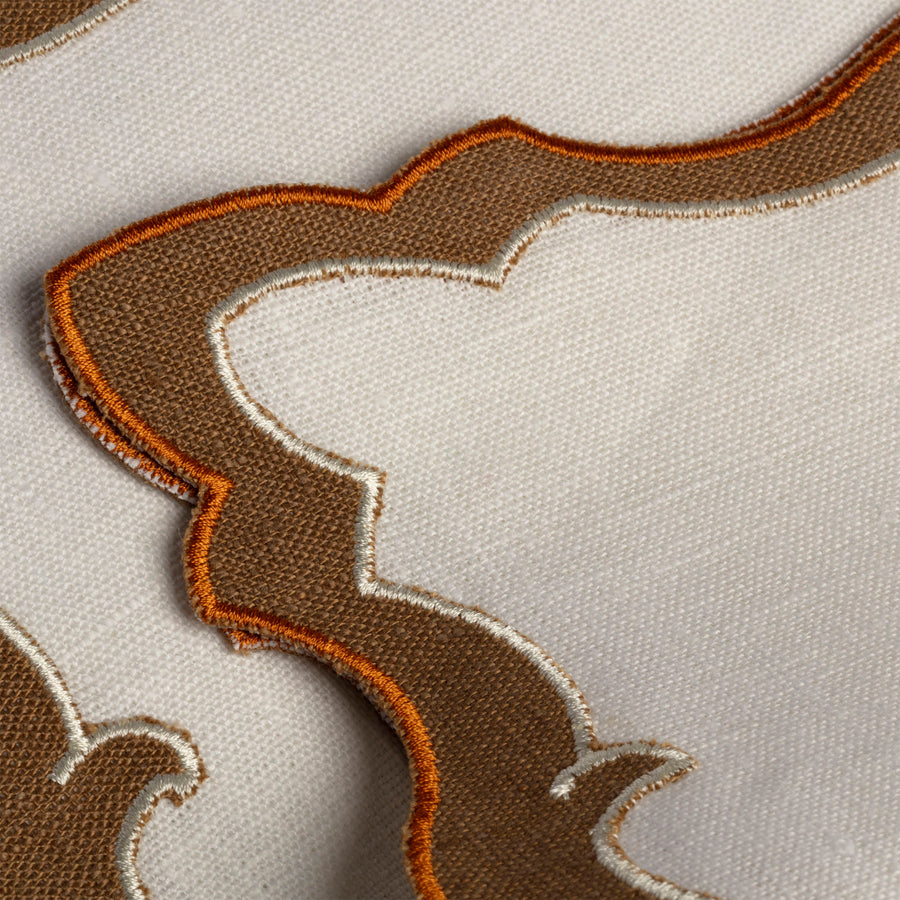
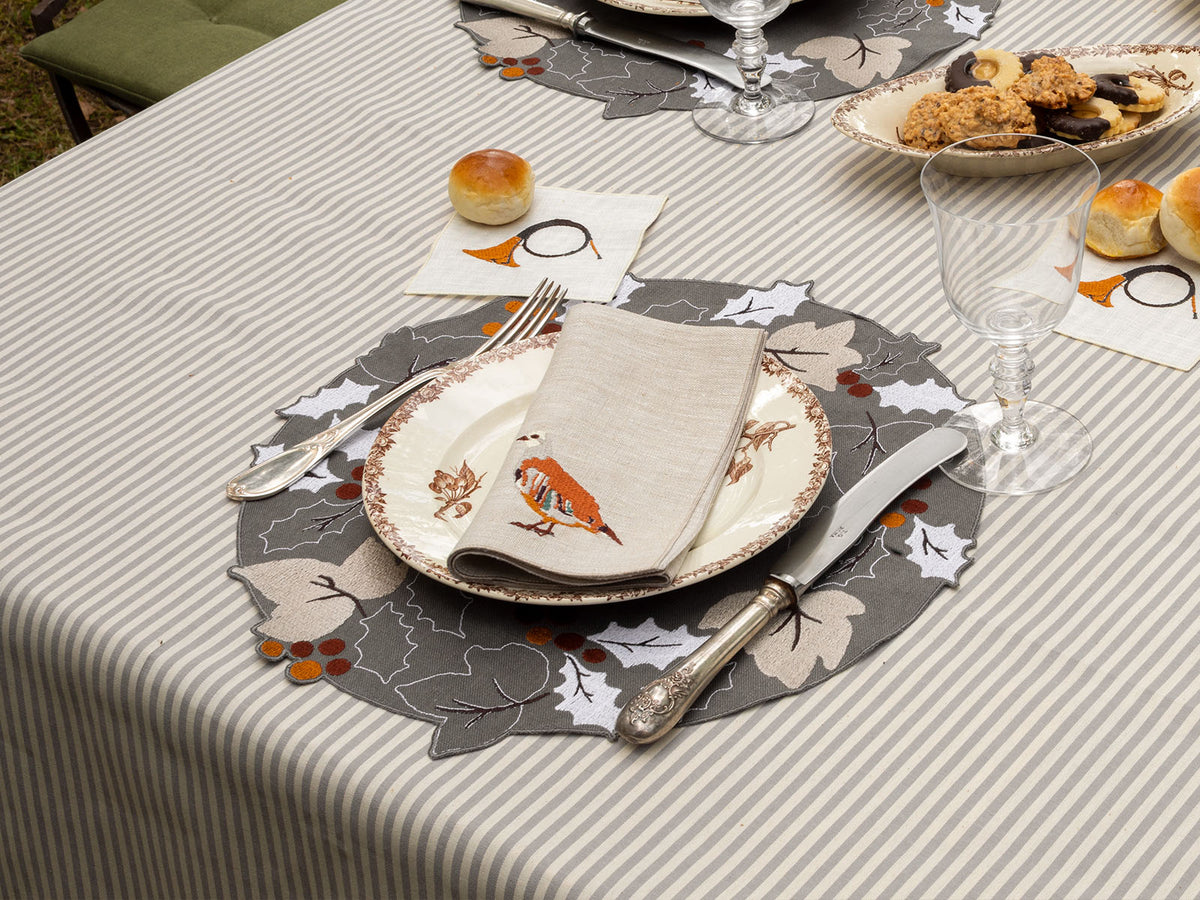
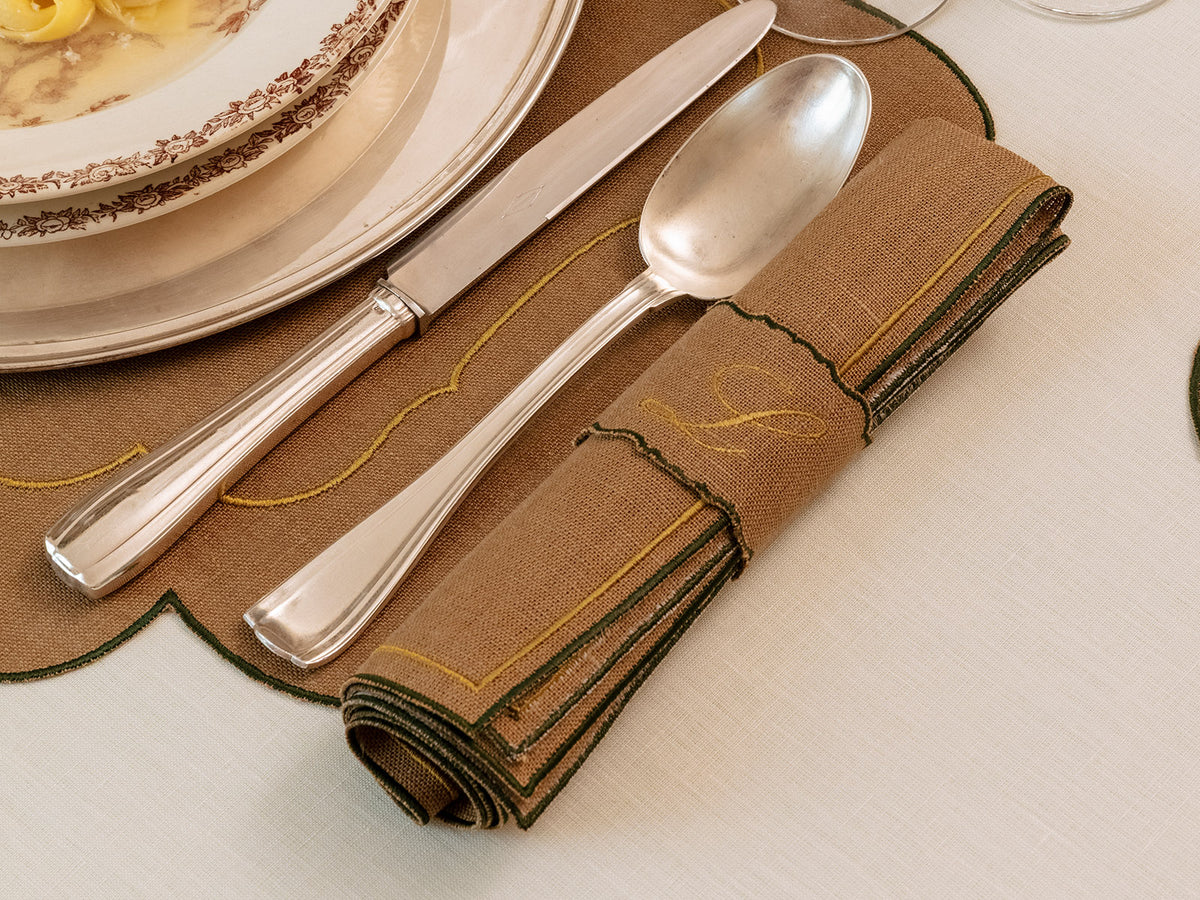
Pure Linen
100% linen
Our linen is cut on the straight grain, following the structure of the fabric, so it keeps its original shape wash after wash.
- Washing
- Machine wash at 40 °C. It may also be tumble dried: take it out while still slightly damp, ready for ironing.
- Ironing
- At a high temperature while the linen is still damp, carefully aligning the edges: the moisture relaxes the fibres and restores the fabric to its natural shape.
- Stains
- Treat promptly, without rubbing and always before washing. The right remedy for each stain is below, in Little mishaps.
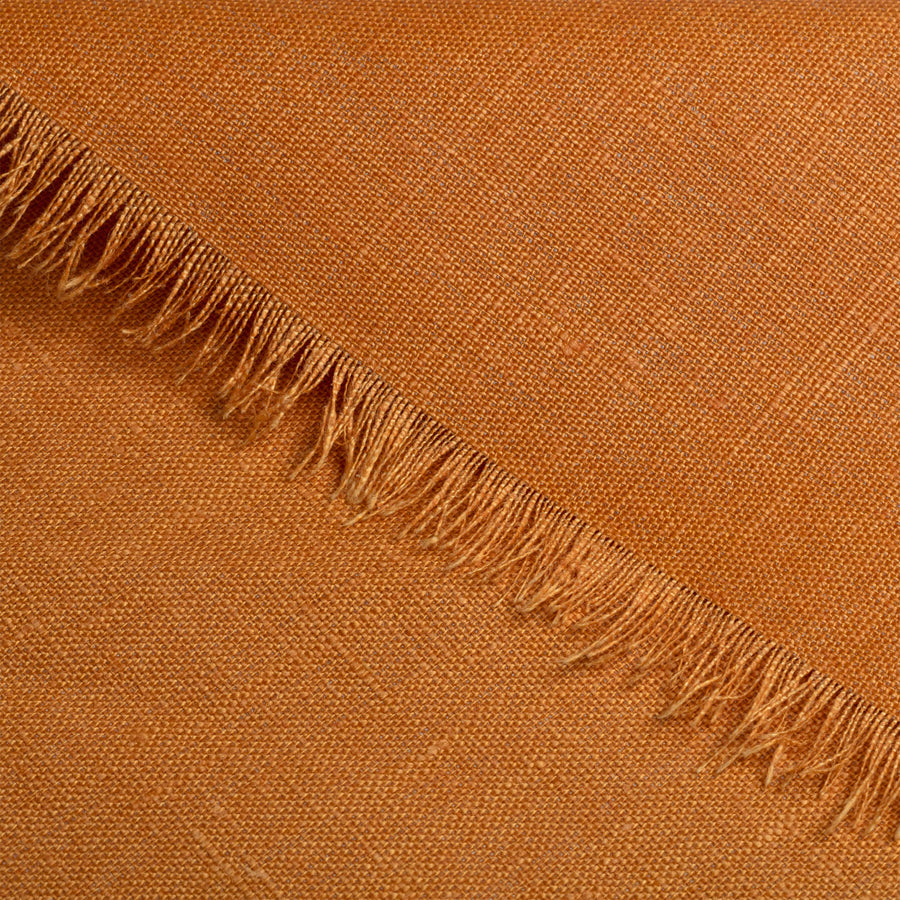
Coated Linen
100% linen, coated on the face to make it stain-resistant and water-repellent
- Daily care
- After each meal, a soft, lightly dampened sponge is all it needs. For an impeccable look, iron every three uses and store gently folded, without pressing the creases or placing heavy linens on top.
- Washing
- Machine wash at 30 °C on a delicate cycle with a mild detergent. Leave to dry in the open air, avoiding the tumble dryer. A slight shrinkage of about 3% after the first wash is entirely natural.
- Ironing
- At a high temperature, always on the reverse, on the uncoated side.
- Stains
- Treat promptly, without rubbing and always before washing. The right remedy for each stain is below, in Little mishaps.
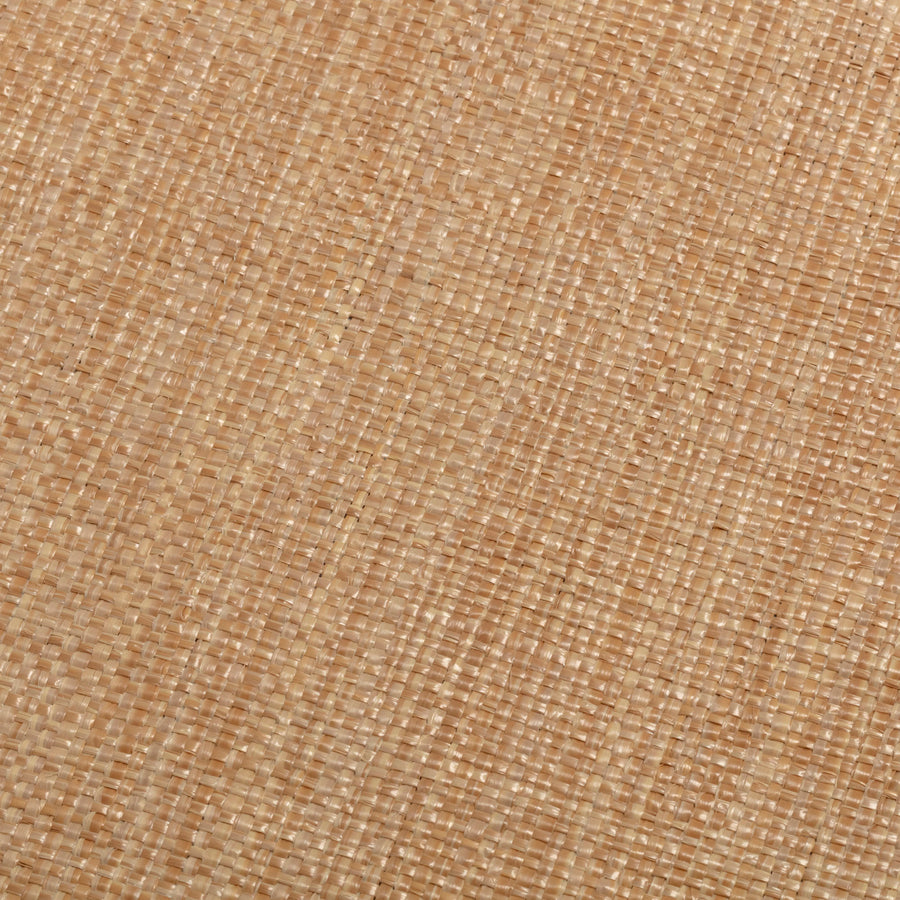
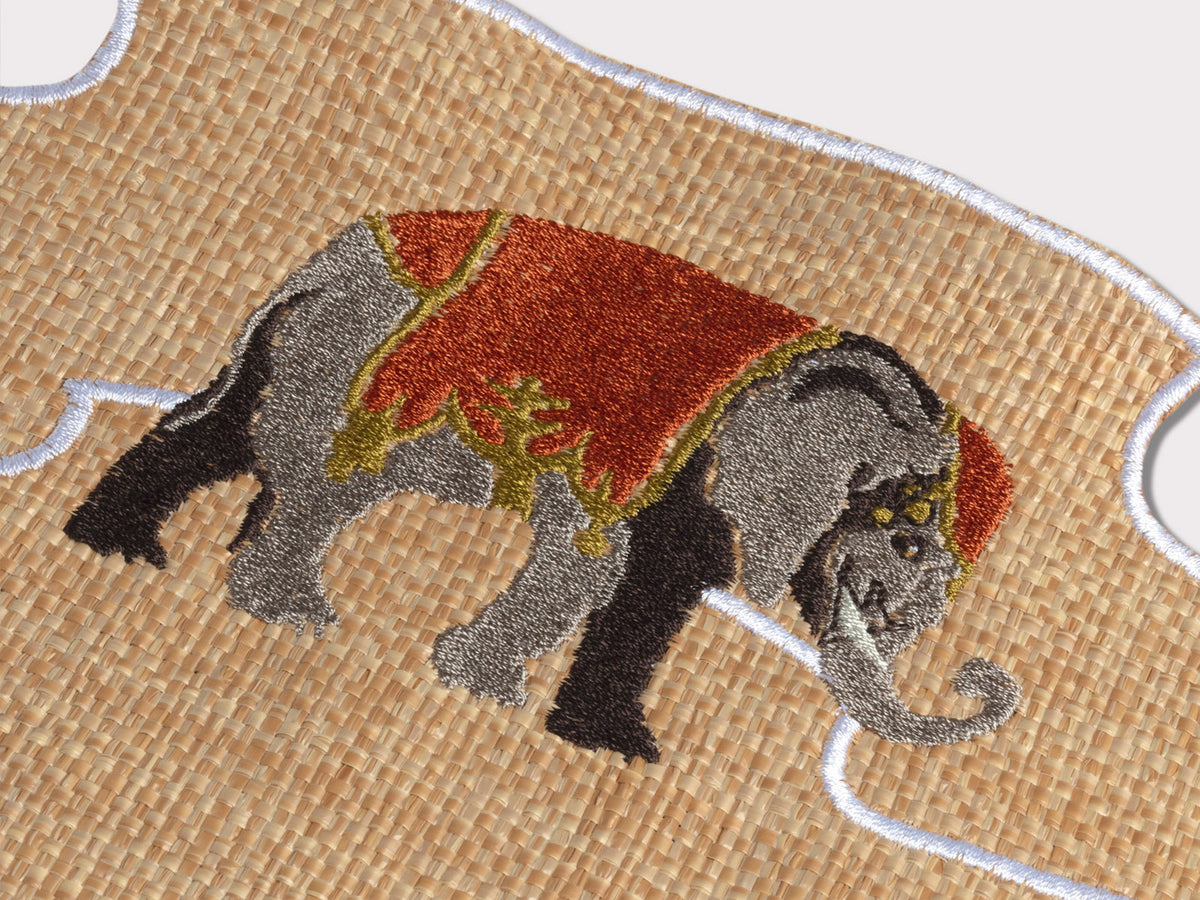
Raffia
100% polyester
A technical weave with a natural look, designed for the everyday table, indoors and out: it withstands sun, water and wear.
- Daily care
- After each meal, a soft, lightly dampened sponge is all it needs. Any stains should be treated promptly; for persistent grease stains, a drop of dish soap is enough.
- Washing
- Should a full wash be needed, machine wash cold, never above 30 °C, on a delicate cycle. Do not tumble dry: dry flat and well spread out, gently guiding the fabric with your hands so that the corners keep their shape.
- Ironing
- Do not iron.
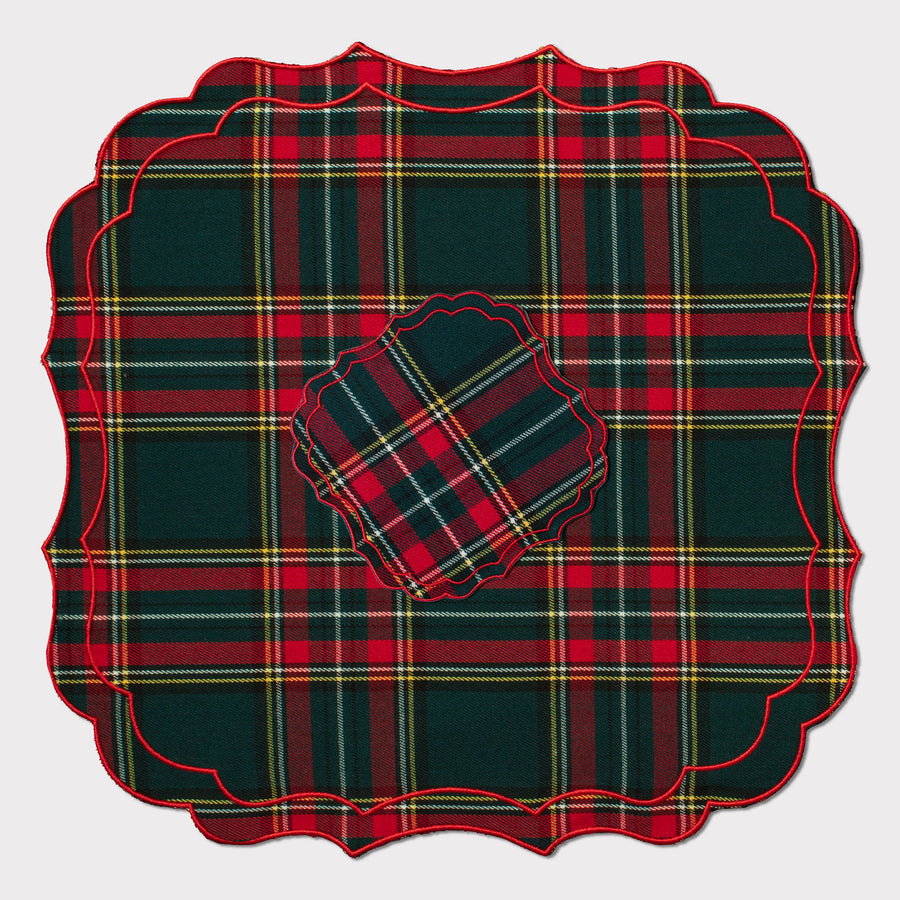
Tartan
65% polyester, 35% viscose
- Washing
- Machine wash at 30 °C on a delicate cycle. Do not tumble dry: at the end of the cycle, remove it promptly and leave it to dry well spread out.
- Ironing
- Iron on the reverse, at a moderate temperature. If needed, it may also be ironed on the right side: to prevent shine, avoid pressing hard and place a clean cotton cloth between the iron and the fabric.
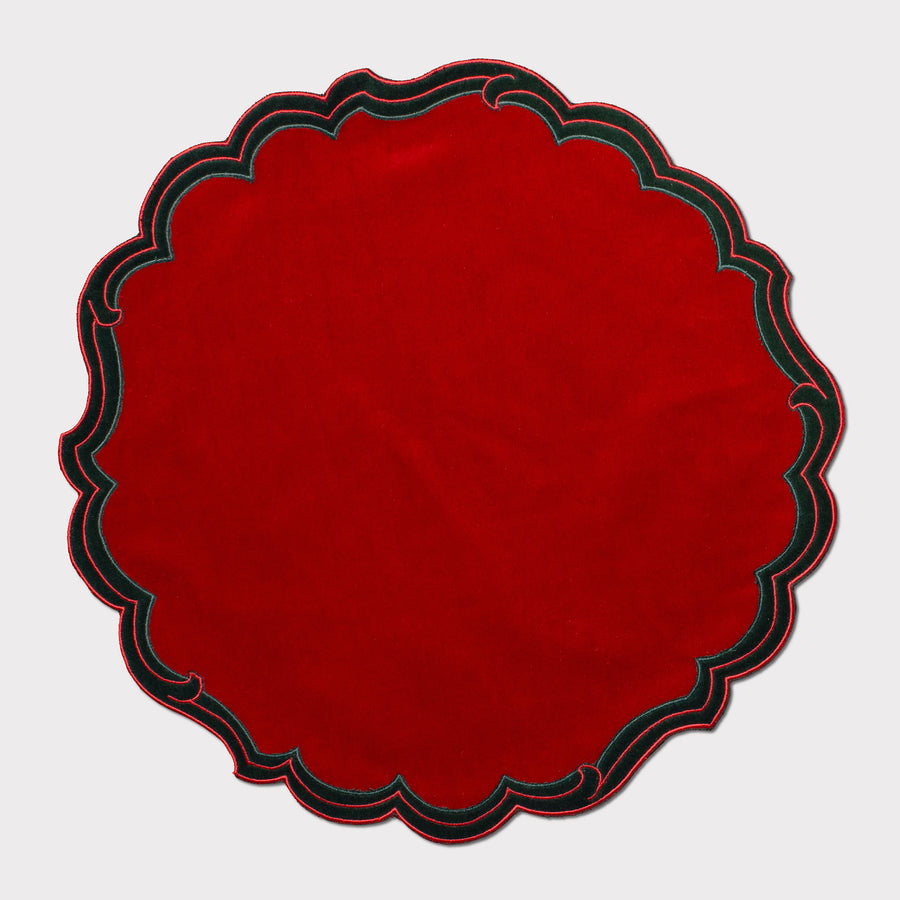
Velvet
100% cotton
- Washing
- Machine wash at 30 °C on a delicate cycle. Do not tumble dry: at the end of the cycle, remove it promptly and leave it to dry well spread out.
- Ironing
- Always on the reverse, holding the iron a few centimetres above the fabric without ever resting it: this keeps the velvet's pile soft and intact.
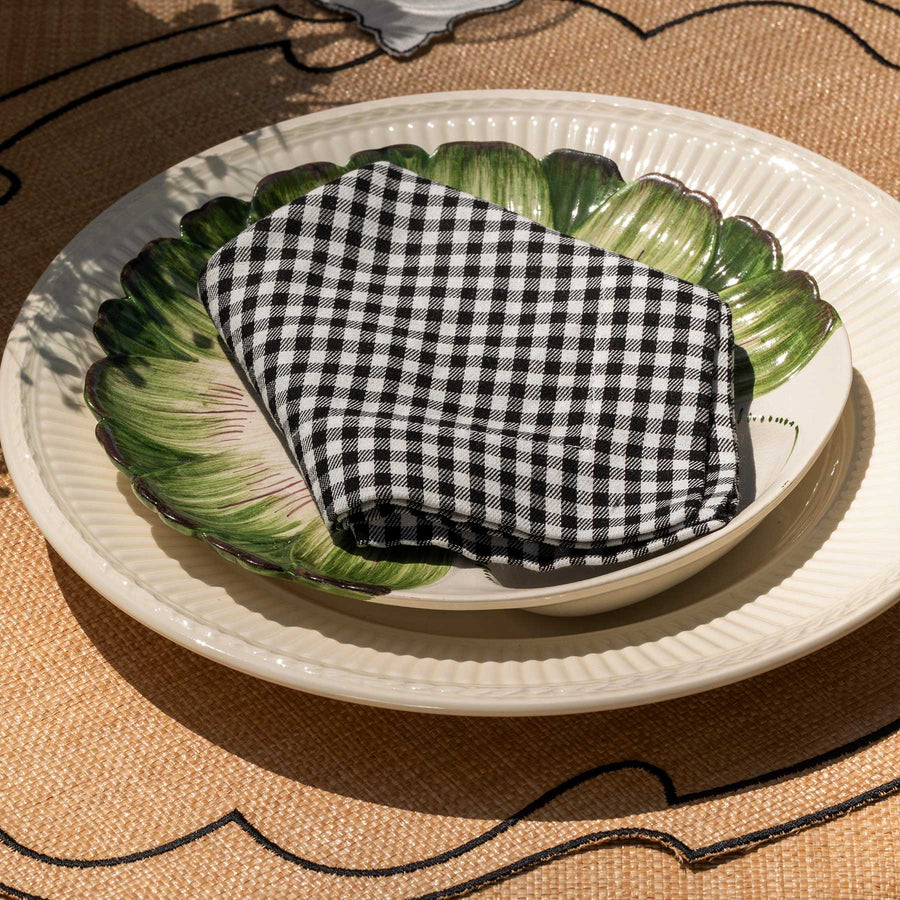
Cotton
100% cotton
- Washing
- Machine wash at 40 °C. It may also be tumble dried: take it out while still slightly damp, ready for ironing.
- Ironing
- At a high temperature while the cotton is still damp, carefully aligning the edges: the moisture relaxes the fibres and restores the fabric to its natural shape.
- Stains
- Treat promptly, without rubbing and always before washing. The right remedy for each stain is below, in Little mishaps.
Little mishaps
Advice for stains on linen, coated linen and cotton
Every stain should be treated promptly and without rubbing, before it sets into the fibres, and always before washing.
Wine, tea, coffee, soft drinks and red berries
Blot straight away with a clean cloth dampened with cold sparkling water, then rinse with cold water.
Oil, butter, sauces and dressings
Sprinkle the still-fresh stain with flour, pressing it gently into the fabric, and leave it for at least half an hour before removing it. On any remaining traces, apply a mild liquid detergent or, for greasier stains, a drop of dish soap; then rinse.
Fruit, juices, jams, chocolate, eggs and ice cream
Gently remove any excess, then blot with cold sparkling water and, if needed, a little mild liquid detergent.
Honey, sugars and syrups
Dampen with warm water to dissolve the residue.
Candle wax
Let it cool completely, then lift it away with the edge of a teaspoon. For any residue, place absorbent paper above and below the fabric and pass the iron briefly at a low temperature, without steam, replacing the paper as it absorbs the wax.
After treatment
Wash as usual without resorting to high temperatures, and make sure the stain has completely disappeared before ironing. Should it persist, entrust the fabric to a trusted dry cleaner, mentioning any embroidery.
Something we haven’t covered? Write to us at info@lagallinamatta.com: we’ll be glad to help.